


How to Improve Your FICO Credit Rating Score
Personal_Finance / Credit Cards & Scoring Jun 30, 2009 - 11:16 AM GMT

 Nilus Mattive writes: In the Dividend Superstars issue that just went to press, I talked about FICO credit scores — the three-digit numbers that greatly determine how much money we can borrow, what interest rates we pay, and even how employers and landlords view us.
And I think this information is so critical to your financial life that I want to go over some of the details again here in Money and Markets today. Plus, I want to tell you why I think the system as it stands today is treating many responsible savers and borrowers unfairly in these credit-crunched times. That’s something I didn’t have room for in the latest Dividend Superstars newsletter.
So let’s get into it …
The Basics of Credit Scores
If you’ve been reading my columns and issues, you know I firmly believe you should pull your credit reports from the three major reporting agencies — Equifax, Experian, and Transunion — once a year. Doing so is now completely free because of the Fair Credit Reporting Act.
You can choose to pull all three reports at one time, or space them out throughout the year so you get a frequent look into your records.
Whatever way you choose to do it, look for errors, incorrect addresses, or any suspicious activity. If you have questions or corrections, don’t hesitate to contact the agency. After all, your credit score affects the interest rates you pay on all kinds of loans.
To get those reports, visit www.annualcreditreport.com or call 1-877-322-8228. You can also request them by mail at: Annual Credit Report Service, P.O. Box 105281, Atlanta, GA 30348-5281.
Of course, when you pull those reports you WILL NOT see your actual credit score, which is derived from your reports.
The most commonly cited credit score number is known as your “FICO score,” named after the firm that created it, Fair Isaac Co. The three-digit number falls between 300 and 850, with most people falling into the 600s or 700s.
Landlords and employers use credit scores as a way to get a sense of who you are, and as I noted, a FICO score greatly affects your borrowing ability. Fair Isaac says a borrower with a 580 might pay three percentage points more for a loan than someone with a 720!
The importance of your FICO is only getting more dramatic with the ongoing credit crunch. Some mortgage lenders have even been creating additional tiers above the 740-750 level, which has typically represented the general cutoff point for their “best” customers.
How a FICO Score Is Calculated, Along With Recent Important Changes …
Fair Isaac’s website gives the following general guidelines:
- Your payment history counts for 35%. Being late on credit card balances, declaring bankruptcy, and other factors fall into this category.
- Your debt counts for another 30%. This includes your overall debt vs. credit available, the balances on individual cards, and similar factors.
- The length of credit history makes up 15%. In simple terms, the longer your credit history, the better your score will be.
- Applications for new credit contribute 10%. Whenever you go shopping for a mortgage or open a new credit card, your score can potentially suffer.
The rest of your score comes from a mix of other factors. And note that the exact algorithm behind the FICO score is a closely guarded secret that is continually being tweaked.
For example, in February of 2009 Fair Isaac made a number of important changes to the formula:
- Only spouses and children are able to piggyback onto your cards to boost their scores. Debts of less than $100 that go into collections do less damage to your score. Having less available credit hurts a score more. A healthy smattering of loans (i.e. student, mortgage, credit card, etc.) helps a score. Closing accounts hurts a score.
- Single negative events may have less of an effect.
So How Can You Help Your Score (Or At Least Not Hurt It)?
Here are some of the basic steps you can take:
First, you should keep a few credit cards open for as long as possible, and with high available lines of credit even if you aren’t really using them all that often.
It can make sense to close a couple newer cards, especially if they levy annual fees, but be careful that you’ll still have a healthy amount of available credit and a long continuous history.
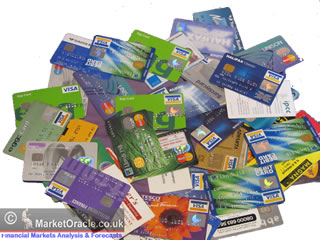 |
| Cancelling credit cards might actually hurt your credit score! |
And don’t let your few cards sit completely idle because lenders may unexpectedly close them, reduce your available credit, or stop reporting the activity to the credit agencies.
Second, you should not go around opening new cards just to get those initial 10 percent-off discounts or shopping for a home equity loan just to see what rate you can get. FICO tries to account for similar credit inquiry activity all falling within a small window (roughly 45 days) such as when you go mortgage shopping, but it still makes sense to limit your activity in this area.
Third, high balances are to be avoided. And if possible, you should spread out your activity among a few cards.
Fourth, don’t forget about the simple steps like consistently paying bills on time and correcting errors on your credit reports, either.
Yet All This Begs One Last Question: Is the FICO System Even Fair in Today’s Environment?
Think about some of the steps I just outlined: Keep cards open that you aren’t really using … have a “healthy mix of debt” … and don’t shop around for loans very often.
Do those make sense to you? Do those sound like steps a conservative consumer should take?
No way!
And yet these are apparently some of the best ways to get — and keep — a top credit score.
Consider this case: A hypothetical borrower has paid cash for his house and cars. He uses just one rewards card for all his purchases and pays off the balance in full every month, though he sometimes changes what card he uses based on the best rewards program at the time. And he frequently rolls his savings into CDs with whatever bank pays the highest rates.
Now, that sounds like someone I would loan money to! I mean, the guy has no debt and makes sound financial decisions.
Yet, as far as the FICO system is concerned, he doesn’t have much of a credit history nor a smattering of loans. And all that credit card and CD shopping will also cause a lot of credit report pulls.
Oh, and get this: From what I’ve heard, the FICO system doesn’t recognize patterns like regularly paying off large credit card balances. So in our hypothetical example, Mr. Conservative would also show a high debt-to-available credit balance.
Now, I’m sure this guy would still have a very decent score. And if he’s cash rich and debt free, he probably wouldn’t give a darn what Fair Isaac’s system thought of him, either.
But what if he did decide to go shopping for a second home mortgage? Would the system — or the lenders who blindly rely on it — actually see him for the low-risk borrower he is?
My general impression is that FICO is best applied to the masses — people who live with all kinds of loans and spend the rest of their days faithfully paying off little bits here and there. And I guess that’s exactly who lenders want to court, too.
Still, anyone who is responsible and doesn’t fit “the mold” might be left calling FICO’s creator “Unfair Isaac” when it’s time to shop for a loan.
Best wishes,
Nilus
This investment news is brought to you by Money and Markets . Money and Markets is a free daily investment newsletter from Martin D. Weiss and Weiss Research analysts offering the latest investing news and financial insights for the stock market, including tips and advice on investing in gold, energy and oil. Dr. Weiss is a leader in the fields of investing, interest rates, financial safety and economic forecasting. To view archives or subscribe, visit http://www.moneyandmarkets.com .
Money and Markets Archive |
© 2005-2022 http://www.MarketOracle.co.uk - The Market Oracle is a FREE Daily Financial Markets Analysis & Forecasting online publication.
