


US Financial System in Crisis as Government Hides the Truth to Prevent Bond Market Panic
Interest-Rates / Financial Crash Aug 05, 2008 - 02:42 PM GMT

 Martin Weiss writes: With America's economy sinking rapidly into recession, with much of America's financial system teetering on the brink, and with a presidential election just three months from today, our leaders in Washington are under siege.
What are they saying behind closed doors? What worst-case scenarios are they contemplating? What contingency measures are they debating?
I have no pretense of being privy to the answers. Nor can anyone forecast what they will do in the press of events. But we do have abundant research and data to serve as a basis for guessing. Add a healthy dose of imagination, and I can begin to draft a script, below.
Just bear in mind that what follows is fiction — a scenario that I trust will give you greater insight into the dire reality of our times, along with a better understanding of what's likely to come.
The Last Government Rescue
(Draft Script for a Fictional Scene)
A regularly scheduled meeting between Treasury Secretary Paulson and Fed Chairman Bernanke is hastily expanded to include the CEOs of Fannie Mae and General Motors, plus former Fed Chairmen Alan Greenspan and Paul Volcker.
The Treasury Secretary seeks unanimous vows of confidentiality and opens the discussion with an air of confidence. His immediate agenda: To get everyone on the same page to make consistent public pronouncements in support of the government's rescue efforts for the economy.

Treasury Secretary Henry Paulson: Gentlemen, I know we have problems, and that's why we're here today. But let's begin by counting our blessings: The stimulus plan has supported the economy during this difficult period, and it couldn't have been timelier. American families spent, American companies invested, and the country as a whole benefited from strong export growth.
Yes, I know the 1.9% growth in GDP in the second quarter disappointed some people. But a lot of that was due to a decline in inventories, which is healthy. The economy is not contracting; it's growing. Employment is still historically very high. Inflation is still historically low.
Moreover, this is the message I would hope to see everyone put out. In normal times, I wouldn't presume to tell you what to say or how to say it. But in this unsettling climate — in this atmosphere of frazzled nerves on Wall Street — the last thing we need is dissenting voices from the administration, from former government officials or even from industry. To restore confidence — to prevent panic — we must present a united front, a single voice that resonates with the public, that's credible, that can inspire, that can motivate investors to invest and banks to lend.

Fed Chairman Ben Bernanke: I agree. We have to tell the truth. But there should be no rush to tell the whole truth. Always count your blessings, and do so publicly.
Former Fed Chairman Alan Greenspan: Blessings? This is a disaster and it's getting worse. The United States is living through a once-in-a-century crisis tied to the plunge in home prices, and those prices are nowhere near a bottom.
Paulson: I know housing continues to be at the heart of our economic challenges and remains our most significant downside risk. I know home prices are likely to decline further on a national basis. I know foreclosures are going to be increasing. And I didn't say we should deny these realities in public. I myself have recently admitted to all of them — in speeches, in front of dozens of TV cameras.
Bernanke: My sense is that if we don't acknowledge at least some of the most obvious issues, we look foolish.
Paulson: Agreed. But you and I also agree that we don't have to be so blunt as to cause panic in the markets. Look. I'm not asking anyone here today to ignore the issues. What I'm asking is that we do everything we can to stress the positive . Focus on the big steps we've taken — like the stimulus package and the housing legislation. Talk about the brevity of the current correction and the longevity of the coming recovery.
Give people hope, damn it! Don't run around talking about the housing market as a bottomless pit ... or about the huge risks the Fed is taking by inserting itself into broker balance sheets ... or about Fannie Mae being insolvent.

Greenspan: The last of those three statements was not mine. But it's true. Fannie Mae is insolvent. And what you're advocating — that we sugarcoat the realities even more than we normally do — is a huge mistake in its own right. The sooner people face the music, the sooner they'll deal with it and the quicker we'll get this thing behind us. The longer we cover it up and pussyfoot around, the worse it's going to be in the long run.
I said it once, and I'll say it again: Gentlemen, face it. This is a disaster and it's getting worse. Home prices, which we said would stabilize, are doing nothing of the kind. Detroit, which we said would be turning the corner, is falling off a cliff. The credit crunch, which we said was ending, looks like it's just beginning a new, broader phase. Inflation, which we said was moderate, is doubling. The federal deficit monkey, which we said was tamed, is going wild again.
That's what folks out there are talking about. That's what's in their face every day on the nightly news. Heck, the only "good" thing I hear anyone talking about nowadays is the fact that a barrel of oil costs "only" $125, which, I need not remind you, is double what it was last year.
Paulson: So that's what you want to tell the American people? That "this is a disaster and it's getting worse"?
Greenspan: No, but how can we address the dangers we face if our primary agenda is to disguise the true gravity of those dangers? First, we risk losing all credibility — looking like horse's asses. Second, we risk a situation in which we ourselves start believing our own B.S. But most fundamentally, we risk losing the opportunity to cure the cancer before it spreads to critical organs of our economic body.

Fannie Mae CEO: I can no longer dispute the comment that we're insolvent.
Paulson: Please give us a heads up on that.
Fannie Mae: This week, we are going to announce still another round of downgrades in our forecasts for credit losses.
We've already warned investors that credit-related losses, such as payouts on loans we guarantee, were going to rise for the rest of the year. But this market is crumbling far faster than anyone dreamed possible. Even the Jeremiahs and Cassandras at Fannie Mae — and believe me, there are more of them coming out of the closet every day — even they underestimated how fast the home market could come unglued. Even they underestimated the degree to which that pattern would persist through the present and into the future.
Look at the numbers that just came out. You've got home prices falling far faster than expected. You've got more people defaulting on their mortgages at a faster pace than expected. And you've got foreclosures spreading faster than anything we've ever seen in the history of this country. It's a revolution. It's sweeping the country like wildfire. And it's being led by people willing to abandon their homes without the least remorse.
Paulson: Bottom line?
Fannie Mae: Bottom line, the forecast we made back in May — and Freddie Mac's forecasts as well — are way off target.
Paulson: Is that why Standard & Poor's just raised its loss estimates on your risky loans? Is that why Wall Street is saying you may not have enough capital to offset those losses?
Fannie Mae: Yes. We did ratchet up our expectation for 2008 credit loss ratio to at least double our historical range. But now we know it's going to be a lot worse.
Paulson: OK. I understand. But whatever you do, don't admit to the idea that you're insolvent. Stick to our story! Your primary regulator, OFHEO, says you have adequate capital. I've testified before Congress that you have adequate capital. You've said you have adequate capital. We can't let the market bust our bubble.
Fannie Mae: Bust our bubble? The bubble has already burst, and look who's getting stuck with most of the foreclosed properties: Fannie Mae.
Let me give you a concrete example: We have 5,000 real estate brokers all over the country handling our foreclosure sales. And in Flint, Michigan, we have one broker trying to sell one particular home for a price that will shock you.
Paulson: About thirty or forty thousand dollars?
Fannie Mae: No. He first tried to sell it for $6,900. But he had no takers. So then he cut the price to $5,000. Still no buyers! And this is a three-bedroom home in a residential neighborhood we're talking about. Not a two-door Chevy on a used car lot!
Bernanke: How widespread is this?
Fannie Mae: Just in the first quarter, we got saddled with twice the number of homes through foreclosure than we could sell. We're trying to get rid of them quickly. But we keep falling further and further behind.
Bernanke: How much do you and Freddie Mac have in foreclosed homes on your books?
Fannie Mae: As of March 31, $6.9 billion worth. Right now, much more.
Bernanke: That's a lot, but in proportion to the $5 trillion-plus in mortgages that you and Freddie own or guarantee, it doesn't sound like that much to me.
Fannie Mae: Maybe not. But try this arithmetic exercise: Throw together all the foreclosed homes owned by every single one of the nation's 8,500 commercial banks and thrifts. How much do you think that adds up to? I'll tell you. It adds up to a figure of $8.56 billion.
See that? 8,500 banks and thrifts have $8.56 billion in foreclosed homes. But between Fannie and Freddie — just two companies — we're stuck with almost as much — $6.9 billion. In fact, if you look at all the money tied up in foreclosed homes in the U.S., about $4 of every $10 is our burden.
Bernanke: What are you doing about it?
Fannie Mae: Until now, our stated goal has been to always try to get the highest possible price, even if that meant hanging on to the properties longer. But that's about to change. Now, we're going to have to start pricing our properties a lot more aggressively. And consider this: Once we send the directive to our 5,000 brokers across the country — to start dumping — there's no way we can keep that directive under wraps. The Street will know. Everyone will see what's really going on.
Paulson: Could it be that you are overstating the price declines and the losses that they could cause? Take that house in Michigan, for example. It must have been a dump to begin with. Do you know how much it sold for originally?
Fannie Mae: It's a dump all right. It needs a new roof. It needs new carpeting. The plumbing has been ripped out. But just three years ago, in 2005, it was not a dump. Three years ago, it sold for $110,000. So even assuming we can find a buyer for the $5,000, its price has fallen by over 95%.
Naturally, most of our foreclosed homes for sale haven't fallen that far, that fast. But this gives you an anecdotal illustration of what we're up against. And it gives you a sneak preview of the much deeper home price declines that are possible in the future.
Paulson: But how widespread is this, really?
Fannie Mae: What definition are we using for "widespread"? If I told you that among the supposedly "AAA" rated subprime mortgage securities issued in 2006, the default rate is now about 85%, would that qualify as "widespread"?
Paulson: Eighty-five percent?
Fannie Mae: Yes, 85%! And I'm not referring to a small, little subset of our portfolio. We've got about $70 billion in subprime and Alt-A securities in our portfolio. Freddie Mac is even more at risk, with nearly $150 billion. And that's not even our primary concern. Our primary concern is the surging foreclosure rate in "prime,"supposedly "high-quality," "safe" mortgages, which represent the bulk of the paper we hold or guarantee.
Paulson: What is your official posture on that aspect?
Fannie Mae: We used to say all this was "contained." Now we're trying to put out the message that it's "temporary." But we can't keep up that fiction much longer.
Paulson: Why not?
Fannie Mae: One reason is that, until recently, at least the rating agencies were playing along with us on this, postponing downgrades, keeping the fantasy alive. But now they're downgrading this paper step by step. They're forcing Fannie Mae — and all of us here around this table — to face reality. They're telling us that, until we face reality, this is going to be an endless soap opera.
Paulson: I know all about that. But what makes you say you're insolvent?
Fannie Mae: I was afraid you'd come back to that. Because, I must say, that's the big, immediate downside of facing reality. When we face reality, we're going to have to increase our reserves by such a huge amount, it will finally be abundantly obvious, even to our dearest friends at OFHEO, that we are not adequately capitalized after all — that we are, indeed, insolvent, bankrupt.
Now I ask you: How much longer can we hide this from the public? From ourselves? A few weeks? Days?
Paulson: I don't get it. I just don't get it. I'm not talking just about Fannie Mae. I mean the entire economy. The Fed cut interest rates all the way down to 2%. But that didn't do the trick. We rushed through the stimulus package, and that helped a bit, but barely enough to keep things going for another quarter. Now what do we do? Now what do we say to the American people?

General Motors CEO: I'll tell you what you do. You do whatever it takes to keep Fannie Mae and Freddie Mac capitalized, even if that means making them wards of the United States government. You do whatever it takes to keep banks like Washington Mutual, Wachovia — and certainly mega-giants like Citigroup and HSBC — capitalized.
And while you're before Congress, or the president, or the McCain or Obama people — and while you're making the case that the GSEs and the big banks are vital to America's financial security — you must also make the case that our nation's great auto manufacturers are equally vital to America's security.
You talk about home prices plunging. But have you seen the collapse in used SUV prices? At the end of a two-year lease, one of our most popular SUVs was supposed to be worth $22,000. But as it turns out, the best price we can get for it in the used car market is less than $11,000.
You talk of a housing collapse. But please don't ignore the auto industry collapse. You talk about a mortgage collapse. But God help us all if you ignore the collapse in auto credit! And don't forget the collapse in auto leasing that's coming with the collapse in used car prices.
Most people are clueless about what's really going on, even analysts on Wall Street. For example, we've just reported a $15.5 billion loss for the second quarter ... and that doesn't even begin to reflect the big write-offs from the auto leasing debacle.
The $15.5 billion loss equates to a loss of $27.33 per share. But you want to know the loss most people on Wall Street were expecting? Less than $3 per share!
So, yeah, sure, we did a good job of "putting out a positive message." And, yeah, we fooled them all right. But what good did it do us? All it did was give us an excuse to delay much-needed action.
Paulson: What kind of additional action were you contemplating?
General Motors: For starters, telling it like it is — telling you, telling Congress and telling the American people that unless you give us the same access to capital and funding as you're giving Fannie Mae and Freddie Mac ...
Paulson: ... But the reports I saw last month said you had plenty of cash — enough to last at least a year, maybe two.
General Motors: That was our messaging, yes. And we tried to convince folks that "we knew what was coming in the latest horrendous sales results," that "we knew what we needed to do to respond and react." But now it looks like we really did not know. Now it looks like we'll run out of cash a lot sooner. So like I was starting to say, unless we get federal help, General Motors is history. Ford is history. Chrysler is history.
Paulson: And you still believe that where GM goes, so goes the United States?
General Motors: Yes, I do.
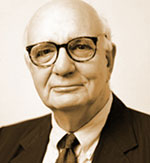
Former Fed Chairman Paul Volcker: I've been listening to all this with increasing unease. Gentlemen, do you not see where this discussion is headed? It's headed toward nationalization of the GSEs, nationalization of Detroit's Big Three, nationalization of major banks.
Earlier, it was said that this thing is spreading like a cancer. What was really meant by that phrase? Well, I can't answer for the person who first spoke it, but I can give you my own interpretation of its meaning:
The truly dangerous cancer that's spreading is the cancer of mistrust. First, mistrust in subprime mortgages. Then, mistrust in higher quality mortgages. Now, mistrust in Fannie Mae and Freddie Mac.
If it were mistrust based on unfounded rumor, we could ignore it. But if it's mistrust based on hard data that's been distorted, quarantined or simply lied about ... then that's another matter entirely.
Let me fast-forward to the final, fatal stage of this cancer, the stage we must avoid at all costs. Let me take you to the day, however unlikely that day is, when it could spread to the U.S. government itself, when investors all over the world can no longer trust the debt of the United States Treasury Department.
Gentlemen, I know what I'm talking about. I looked the precursor of that mistrust in the eyes nearly three decades ago, in my first year as Fed chairman. And in those days, we did not have collapsing mortgage markets or collapsing auto markets or insolvent GSEs. All we had was plain-vanilla, double-digit inflation, without all these extra alarm bells and whistles. In that sense, the mistrust back then was less complex — and more manageable — than it is today.
But it was powerful nonetheless — so powerful, in fact, that it nearly shut down the entire market for U.S. government bonds.
Greenspan: I meet a lot of people who don't remember that time, or don't quite grasp its significance. Please help make sure everyone in this meeting does.
Volcker: It was 1980. We were meeting at Camp David. Present were President Carter, myself, the Treasury Secretary, plus CEOs from Merrill Lynch, Salomon Brothers and other primary government security dealers.
In some ways, this meeting today reminds me of that meeting then — the same sense of siege, the same philosophical disagreements. But there was one aspect we all agreed upon: The spreading investor mistrust in U.S. government bonds.
That mistrust was so intense and so widespread, we could not sell U.S. government bonds. Treasury bills were still fine. But not bonds. No one wanted long-term bonds and the entire market for them was as close to a total shutdown as it's ever been in the history of our country.
Greenspan: Go into the crux of the crisis.
Volcker: The crux of the crisis was that the fear of inflation was so intense, and government bond prices were going down so swiftly, there were virtually no more buyers of government bonds. Worse, primary government security dealers had lost so much money from falling bond prices that they were afraid to buy them at auction, hold them in inventory and resell them.
Yet that's precisely what we needed from them. It's through those dealers that the U.S. government sells nearly all of its bonds. It's through them that we raise nearly all of the money we need to refund maturing bonds and fund the government's day-to-day operations.
Our network of government security dealers is much like GM's network of auto dealers. The dealers buy the merchandise at auction, mark it up, put it on their lots and then hope to resell it.
Now, imagine what would happen if GM's dealer network were to shut down! How would GM be able to sell its cars? That's the same kind of situation the U.S. government was facing for its bonds in those dark days of early 1980. Except for a couple of the biggest dealers, like Salomon Brothers and Merrill Lynch, nearly all the government security dealers were shutting down their government bond operations.
Salomon would call Merrill to sell what's considered a small lot of, say, $100 million in 20-year Treasury bonds. At the same time, someone else at Merrill would call Salomon to place a similar trade. It was like two kids trying to trade the same marbles. There were no buyers. Virtually all the other dealers had packed up and gone home.
The point is, in that environment, we could not sell U.S. bonds.
Three-month Treasury bills? No problem. People trusted us for three months. But 20- or 30-year Treasury bonds? No! The market for Treasury bonds had dried up. And without it, the U.S. government simply could not continue to fund its own operations, couldn't meet payroll. Hard to believe, but true: We faced a shutdown of the U.S. government.
Our only answer was to kill the monster that had fomented all the mistrust — inflation. But to do that, we had to jack up interest rates. We had to cut off credit to millions of Americans. And in the process, we knew we were going to squash the economy.
Carter was up for re-election. So you can imagine his initial resistance to the Draconian steps we were proposing. But he had no choice. To bring the point home, he was asked: "Which do you prefer: The chance of losing the election in November? Or the certainty of the presidential paycheck bouncing right now in February?"
Paulson: Can we bring this back to the present?
Volcker: Absolutely. Let's bring this back to the present by asking this question: Is this the direction you want to take the country? If anyone in this room is willing to take that risk, say so now or forever hold your peace.
Because that's the inevitable fork in the road ahead — the end of the fast lane you're now on. I'm referring to the fast lane of open-ended government bailouts. The fast lane of "consistent messaging" to cover up the true cause — and the true consequences — of these bailouts.
Henry, never forget: Millions of investors, mostly overseas, have put their faith in U.S. government securities. They've loaned you their money because they trusted you , the U.S. Treasury Department. If you turn around now and pour their money down the bottomless pits we talked about today — Fannie and Freddie, GM and Ford, major banks — what do you think their reaction will be?
What makes you believe that they'll respond any differently than they did in 1980, when they disappeared from the U.S. government security market or, worse, dumped their bonds in fear?
What makes you believe you can stop the cancer of mistrust from spreading to 1500 Pennsylvania Avenue — to the U.S. Treasury Department itself?
When and if that day arrives, I know we will make the right choices. I am absolutely sure we will never let U.S. Treasury bonds become the next victims of the subprime crisis.
But if we know this now — if we CAN look ahead now and see that's the ultimate choice we will confront someday ... why not make the right choice now, while our economy is still standing, while our country still has the resources to make the needed sacrifices?
Face it, gentlemen: The last government rescue must not be to save the government itself. It must be one of the first government rescues. We must first save ourselves.
Good luck and God bless!
Martin
This investment news is brought to you by Money and Markets . Money and Markets is a free daily investment newsletter from Martin D. Weiss and Weiss Research analysts offering the latest investing news and financial insights for the stock market, including tips and advice on investing in gold, energy and oil. Dr. Weiss is a leader in the fields of investing, interest rates, financial safety and economic forecasting. To view archives or subscribe, visit http://www.moneyandmarkets.com .
Money and Markets Archive |
© 2005-2022 http://www.MarketOracle.co.uk - The Market Oracle is a FREE Daily Financial Markets Analysis & Forecasting online publication.
